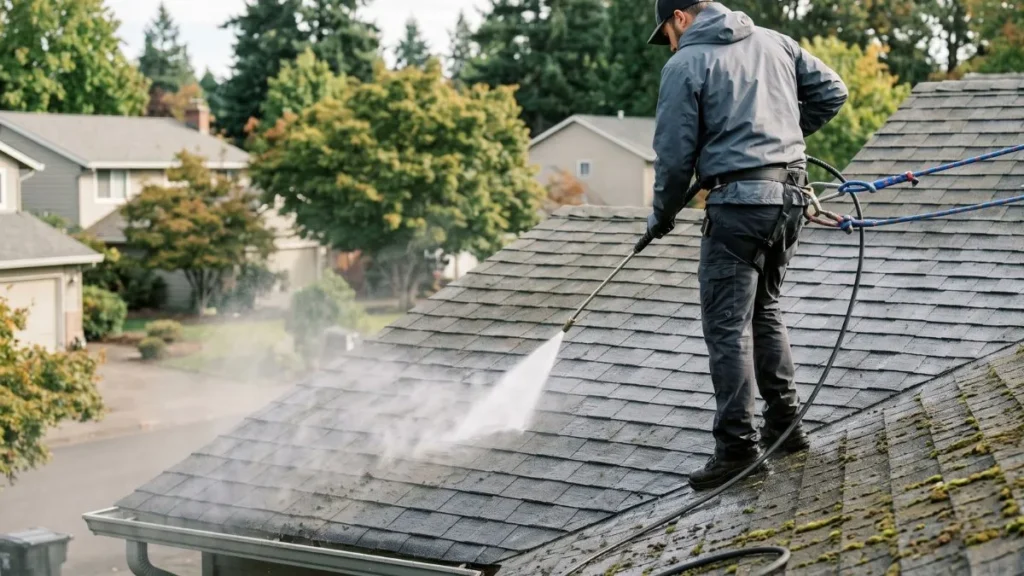
You’re standing there with a pressure washer (or thinking about renting one), and a simple question pops into your head: Can I power wash roof shingles… or am I about to mess something up?
It’s a fair question.
Power washing works great on concrete, walls, fences, and cars. So it feels logical to assume it should work on a shingle roof too. Many homeowners (and DIYers) reach this point before they even notice serious stains.
Here’s the truth most people only learn after doing it wrong: Yes, you can power wash roof shingles, but that doesn’t mean it’s safe.
Below we will answer can you power wash roof shingles, why using a pressure washer is risky, and what will actually happen to shingles under high pressure. Let’s get started!
Can You Power Wash A Shingle Roof?
Short answer: Yes, you can. But “can” and “should” are not the same thing.
From a practical standpoint, homeowners do power wash shingle roofs. Rental machines, YouTube tutorials, and before-and-after photos make it seem like a normal part of DIY home care.
However, there’s an important detail most people miss. Shingle roofs, especially those made from Asphalt shingles, aren’t built for high-pressure cleaning.
They’re designed to shed rain flowing downward and not to be hit with concentrated water force. That mismatch is why this topic creates so much confusion, and why simply being able to power wash a roof doesn’t mean it’s a safe idea.
Why Pressure Is The Problem For ‘Roof Shingles’?
A pressure washer cleans by force.
These machines concentrate water into a narrow stream and fire it out at extremely high speed. That’s what makes power washing so effective on concrete and brick, but it’s also what makes it dangerous for roofs. Most consumer pressure washers operate between 1,300 and 3,000 PSI, while professional units can reach higher pressures.
Asphalt shingles are designed to handle natural downward forces such as rainfall, wind-driven water, and gravity-fed runoff (not thousands of pounds of pressure applied directly to them).
They depend on a surface layer of mineral granules to protect against UV rays, add fire resistance, and regulate heat. When high-pressure water hits those granules, it strips them entirely and weakens the shingle, gradually reducing protection, durability, and overall roof performance.
5 Potential Roof Damage From Power Washing
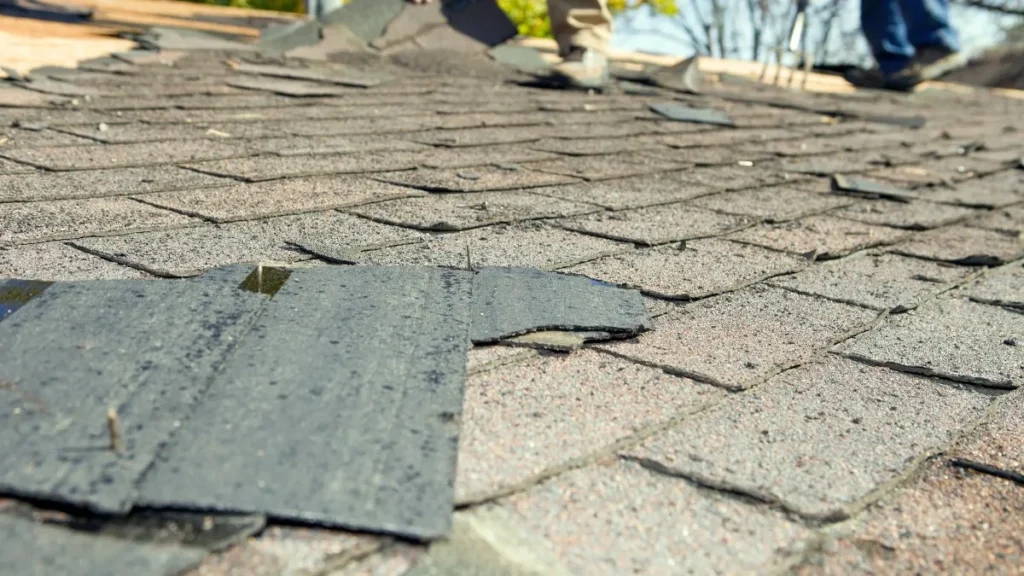
Here’s what actually happens when high-pressure water hits a roof surface. The impact can affect multiple layers of your roofing system over time. With that in mind, let’s break down the most common types of damage caused by power washing.
1. Granule loss
One of the first and most serious issues is granule loss. The surface of Asphalt shingles is coated with protective mineral granules. These granules shield the roof from UV rays, heat, and weather damage. A Pressure washer can easily strip them away, leaving the underlying material exposed and vulnerable.
2. Water Intrusion Under Shingles
High-pressure water can also force its way beneath shingle edges. Instead of flowing off the roof as intended, water gets pushed into gaps and seams, reaching the underlayment and roof deck. This hidden intrusion is dangerous because damage often develops unnoticed.
3. Reduced Roof Lifespan
Once granules are removed and moisture begins penetrating layers, the overall durability of the roof decreases. Even if the damage isn’t immediately visible, the roof ages faster than it should, which reduces its expected service life.
4. Voided Warranties
Many manufacturers of Roof shingles explicitly warn against pressure washing. Using a pressure washer against these guidelines can void your warranty and leave you responsible for future repairs or replacement costs.
5. Long-Term Roof Damage
The combined effects, surface erosion, hidden moisture, and structural weakening, can lead to serious long-term problems. What starts as a quick cleaning attempt eventually results in leaks, rot, and costly roof repairs that could have been avoided.
Also Read: How To Get Rid of Moss On Roof?
Can You Power Wash Roof Shingles Without Causing Damage?
The honest answer: only in very limited cases.
A Pressure washer can be adjusted to gentler settings, but that doesn’t mean it becomes safe for Asphalt shingles. Damage rarely comes from obvious misuse. More often, it happens when pressure is slightly too high, the nozzle gets too close, or the angle concentrates force in one spot, the roof was never designed to handle.
There are rare scenarios where it might be attempted carefully, using very low pressure, a wide spray pattern to spread impact, and consistently working in a downward direction. Even then, what you’re doing is closer to a controlled rinse than actual power washing.
If something goes wrong, it often doesn’t show immediately. Small lifted edges, hidden moisture intrusion, or granule loss can quietly develop into leaks and reduced roof lifespan over time, long after the cleaning is finished.
How To Pressure Wash Roof Shingles (If You Absolutely Must)
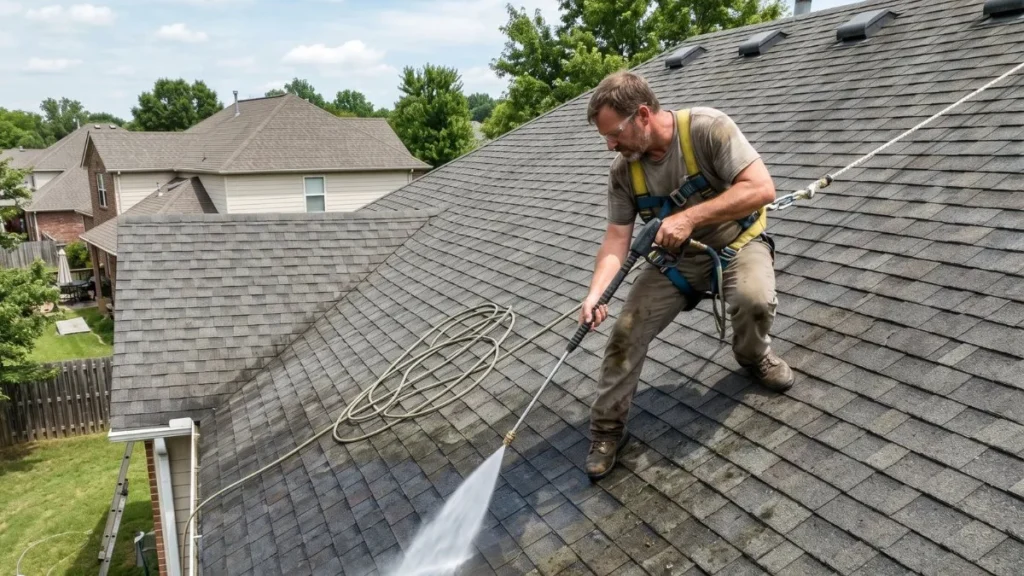
This is a high-level, risk-aware guide. In most cases, professionals recommend avoiding this entirely. Nevertheless, if it is still attempted, precision matters. Let’s understand how can you power wash a roof with shingles safely:
Step #1: It’s A Controlled Rinse
Start by treating this as a controlled rinse, not a cleaning blast. The goal is to remove surface debris without disturbing the roofing structure. Work slowly in small sections so you can monitor how the shingles react. Never rush across the roof, as uneven pressure application increases the risk of damage.
Step #2: Pressure Limits (PSI Range)
Keep the pressure at the lowest possible setting (below 1000 PSI). Anything higher significantly increases the risk of stripping protective granules and forcing water under shingles.
Note: Lower pressure only reduces impact. It does not eliminate risk.
Step #3: Proper Spray Direction
Always spray downward, following the slope of the roof. Never aim upward or horizontally against shingle layers. Spraying upward can lift edges and push water underneath, which is one of the fastest ways to cause hidden damage.
Step #4: Safe Distance
Maintain a wide, safe distance between the nozzle and the roof surface, typically several feet. The closer the nozzle gets, the more concentrated the pressure becomes. Distance helps disperse force and reduces direct impact on individual shingles.
| ❌ Using turbo or rotary nozzles, as they concentrate pressure and can damage Asphalt shingles |
| ❌ Lingering on one spot, since prolonged pressure strips protective granules |
| ❌ Spraying too close to the roof surface, which increases the impact force from a Pressure washer |
| ❌ Walking on wet shingles while operating equipment, increasing slip risk, and uneven cleaning |
| ❌ Cleaning old, brittle, or already compromised roofing |
| ❌ Ignoring manufacturer guidelines, which may void roof warranties |
Frequently Asked Questions (FAQs)
In most cases, no. While a Pressure washer can remove dirt quickly, it also risks damaging Asphalt shingles by stripping protective granules and forcing water underneath the surface. Most roofing professionals recommend avoiding it.
The safest and most effective method is soft washing. This uses low-pressure water combined with cleaning solutions to remove dirt, algae, and moss without damaging the roof surface. In many cases, hiring Professional roofers is the best option because they know how to clean without reducing the roof’s lifespan.
The key is removing organic buildup like algae and preventing it from returning. Regular cleaning, combined with preventive measures like zinc or copper strips, helps maintain appearance. Routine maintenance also slows down wear, keeping Roof shingles looking newer for longer.
Generally, a shingle roof should be cleaned every 1 to 3 years, depending on climate and exposure to moisture. Areas with high humidity or shade may require more frequent cleaning due to faster buildup of algae and moss.
Recommended Solution: Contact Professionals For Roof Washing
If you’re still wondering, can you power wash roof shingles? Remember, most expensive roof issues start with “quick DIY fixes.”
Using a Pressure washer on Asphalt shingles may seem like an easy solution, but it often causes damage that only shows up later.
That’s why many homeowners eventually turn to professionals.
Roof Roof Renewal handles roof cleaning the right way with services like Roof Washing, Gutter Cleaning, Flashing & Vent Sealing, and Roof Coating. We also provide Window Washing and safe Christmas Light Installation for complete exterior care.
Before any work begins, you can book a complimentary roof evaluation, so you know exactly what your roof needs.
Contact our team now and protect your roof before small issues turn into costly repairs.