Roof rejuvenation does not repair an active roof leak by itself. A leak must first be traced to its source and repaired with the correct roofing materials. Rejuvenation may be considered afterward when the asphalt shingles are otherwise serviceable and the roof qualifies for treatment.
Quick answer
If water is entering the home, start with leak diagnosis. Common repairs include replacing damaged shingles, correcting flashing, sealing or replacing pipe boots, repairing valleys, and replacing wet decking. A rejuvenation treatment is designed for aging asphalt shingles. It should never be used to hide unresolved leaks or structural damage.
Why leaks and shingle aging are different problems
Roof rejuvenation and leak repair address different conditions. Asphalt shingles gradually lose flexibility as they weather. A rejuvenation product is intended to treat qualifying shingle material. A leak, however, is a water-path problem. Water may enter through a failed flashing detail, damaged shingle, exposed fastener, roof penetration, valley, wall intersection, or deteriorated deck.
That distinction explains why spraying the visible roof surface is not a reliable leak repair. Water can travel along underlayment, rafters, fasteners, or decking before it appears on a ceiling. The stain inside the house may be several feet away from the entry point.
What roof rejuvenation can help with
On a roof that passes inspection, rejuvenation may be part of a maintenance plan for aging asphalt shingles. The goal is to address material aging before the roof reaches widespread failure. It may be considered when:
- The shingles remain attached and the roof deck is sound
- Aging is relatively uniform rather than concentrated around severe damage
- Granule coverage remains adequate for the product’s qualification criteria
- Required repairs are completed first
- The roof type and installed shingles are compatible with the treatment
For an overview of the decision, see when roof rejuvenation is worth considering.
What roof rejuvenation cannot repair
Failed flashing
Flashing directs water around chimneys, sidewalls, valleys, skylights, vents, and other transitions. If metal is loose, corroded, incorrectly installed, or poorly sealed, it must be repaired or replaced. A surface treatment on the shingle field does not rebuild a flashing assembly.
Cracked pipe boots and penetration seals
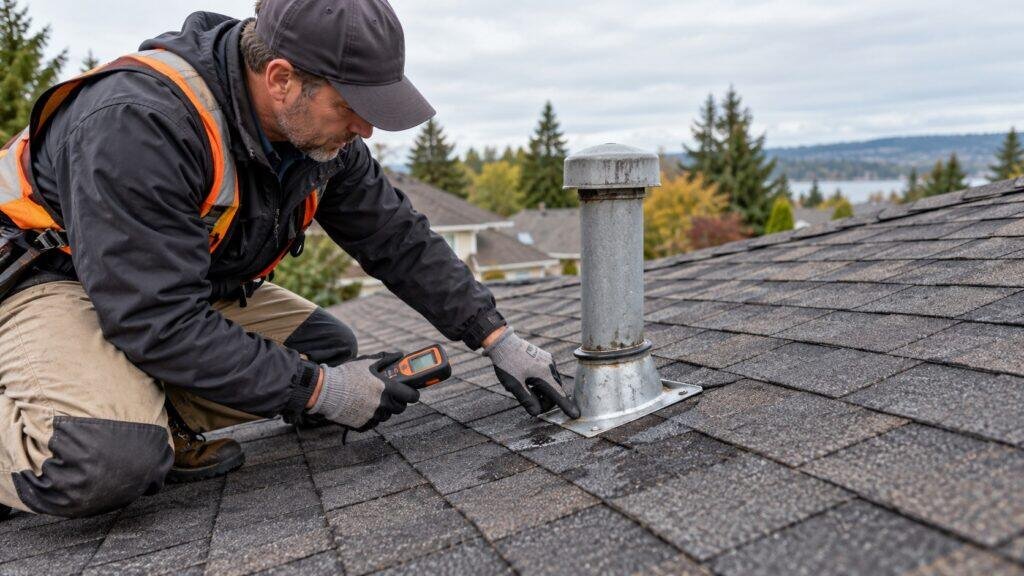
Rubber boots and sealants can split, shrink, or separate with age and ultraviolet exposure. These defects often create localized leaks. The correct fix may include a new boot, flashing component, compatible sealant, or a more complete penetration repair.
Missing or wind-damaged shingles
Shingles that have blown off, torn, creased, or lifted need mechanical repair or replacement. Treatment does not restore a missing water-shedding layer or reseal storm-damaged tabs.
Rotten or delaminated decking
Soft or deteriorated roof decking is a structural substrate problem. The affected area must be opened, the source of moisture corrected, and unsound material replaced. Covering the symptoms can allow damage to spread.
Poor ventilation or condensation
Not every ceiling stain is caused by rain. Warm, humid air can condense in a poorly ventilated attic. Bath fans that discharge into the attic, blocked intake vents, inadequate exhaust, or air leakage from the home may create moisture. The diagnosis must distinguish condensation from exterior water entry.
Low-slope or incompatible roof sections
Some roof areas require membranes or other assemblies rather than standard asphalt shingles. If shingles were installed on an unsuitable slope or the roof includes different materials, those sections need system-specific evaluation.
Seven common leak sources a professional should inspect
- Pipe penetrations: cracked boots, exposed fasteners, and failed seals.
- Chimneys and sidewalls: step flashing, counterflashing, and sealant transitions.
- Valleys: debris, damaged shingles, open seams, or installation defects.
- Skylights: flashing kits, curb details, glazing seals, and condensation.
- Roof vents: damaged flanges, loose fasteners, and failed surrounding shingles.
- Storm-damaged shingles: creases, punctures, uplift, or missing tabs.
- Roof-to-wall transitions: kick-out flashing, siding clearance, and water diversion.
Our flashing and vent sealing service focuses on several of these vulnerable areas.
How a responsible leak diagnosis works
1. Document the interior evidence
Note when the leak appears. Wind direction, rain intensity, snow melt, plumbing use, and temperature changes can provide clues. Photograph stains and mark their size so future changes are easy to see.
2. Inspect the attic where safe
An attic inspection may reveal wet decking, darkened wood, rusty fasteners, compressed insulation, daylight, or water tracks. Electrical hazards, mold, steep access, and weak surfaces require caution. Homeowners should not enter unsafe spaces.
3. Inspect the roof systematically
The professional should examine the roof plane above and upslope of the interior evidence, then review nearby penetrations and transitions. The inspection should not stop at the first cracked sealant bead if other defects are present.
4. Use controlled testing when appropriate
A controlled water test can isolate some leaks, but it must be performed carefully and in stages. Flooding multiple roof areas at once can confuse the result or create new interior damage.
5. Repair the source and verify
The proposal should describe the defect, repair materials, affected area, and limitations. After repair, monitor during subsequent weather. Interior drywall or paint should not be restored until the area is dry and the leak is resolved.
Can a roof be repaired and rejuvenated during the same project?
Often, yes, if the inspection shows that the roof is still a suitable candidate. The sequence matters:
- Diagnose active leaks and moisture sources.
- Replace unsound decking and damaged shingles as required.
- Repair flashing, penetrations, fasteners, and drainage defects.
- Allow materials to dry and confirm the roof meets treatment criteria.
- Apply the rejuvenation product according to its instructions.
- Provide separate documentation for repairs and treatment.
This approach prevents a maintenance product from being mistaken for a repair. It also gives the homeowner a clearer record of what was fixed and what the treatment warranty covers.
When replacement is the safer decision
A localized repair may be reasonable when the defect is isolated and the surrounding roof remains sound. Replacement becomes more likely when there are repeated leaks, widespread shingle failure, extensive decking damage, incompatible layers, large storm-damaged areas, or repair costs that no longer make sense for the roof’s remaining life.
The choice should be based on the complete system. Read our condition-based comparison of roof rejuvenation versus roof replacement.
Questions to ask before approving work
- Where is the water entering, and what evidence supports that conclusion?
- Is the interior moisture definitely from the roof?
- Which repair materials and details will be used?
- Will wet or damaged decking be replaced?
- Are the repair and rejuvenation covered by separate warranty terms?
- What problems are excluded from the proposal?
- If treatment is not appropriate, what is the next responsible option?
What not to do when a roof is leaking
- Do not pressure wash the roof to “find” the opening.
- Do not coat large areas without identifying the source.
- Do not repeatedly smear incompatible sealants over failing flashing.
- Do not walk a wet, steep, icy, or visibly damaged roof.
- Do not ignore wet insulation, electrical fixtures, sagging drywall, or active dripping.
If water is near electrical equipment or the ceiling is bulging, protect occupants and contact qualified emergency professionals. Do not stand beneath a compromised ceiling.
How leaks affect the roof rejuvenation timeline
A repaired leak does not automatically disqualify the roof. What matters is the cause, extent of damage, quality of repair, and condition of the remaining system. A minor pipe-boot failure on an otherwise sound roof is different from widespread leakage caused by failed shingles and wet decking.
If the roof qualifies after repairs, keep the inspection report, repair photos, invoice, treatment date, and warranties together. Our guide to how long roof rejuvenation lasts explains the ongoing inspection cycle.
Frequently asked questions
Will rejuvenation seal small cracks in shingles?
A treatment may be intended to affect shingle flexibility, but it should not be sold as a substitute for replacing cracked, torn, punctured, or missing shingles. Damaged components need an appropriate repair.
Can roof coating stop a leak?
A properly designed coating system can be part of a repair or restoration plan for compatible roof assemblies, but diagnosis and preparation remain essential. Asphalt shingle rejuvenation and roof coating are not interchangeable services.
Why did the ceiling stain appear after the rain stopped?
Water can travel and collect before becoming visible. Wind-driven rain may also enter at a transition and move along framing. Delayed staining is one reason the visible ceiling spot is not a precise map of the roof opening.
Should I call a roofer or my insurer first?
If a storm caused sudden damage, document conditions safely and review your policy or contact the insurer promptly. For ordinary wear or an unknown source, a qualified roof inspection can help identify the defect. Avoid permanent work that could affect a claim before understanding applicable policy requirements.
Start with diagnosis, then choose the right solution
Roof Roof Renewal can evaluate the leak source, shingle condition, flashing, penetrations, and roof deck indicators before recommending repair, rejuvenation, or replacement. Request a roof inspection and written estimate so the solution matches the problem.
Technical reference: Asphalt Roofing Manufacturers Association, Asphalt Shingle Roofs Are Repairable. This article provides general educational information. Roof conditions, product compatibility, warranties, and insurance requirements vary.